Out-the-front deployment changes the relationship between handle orientation and blade position. Side-opening knives require grip rotation during deployment—the blade swings perpendicular to handle axis. OTF mechanisms extend the blade directly forward along handle axis. Your grip position remains constant. The blade emerges aligned with your thumb. This alignment eliminates the repositioning required after side-deployment.
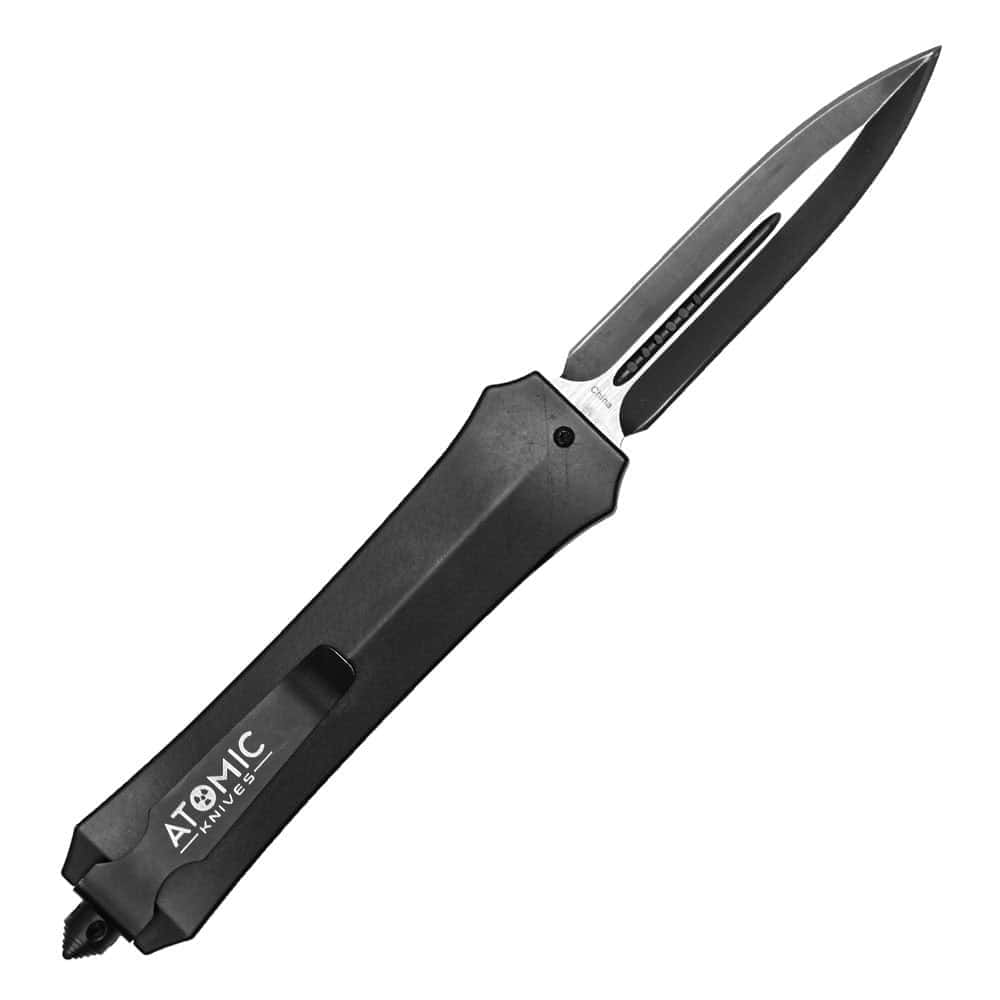
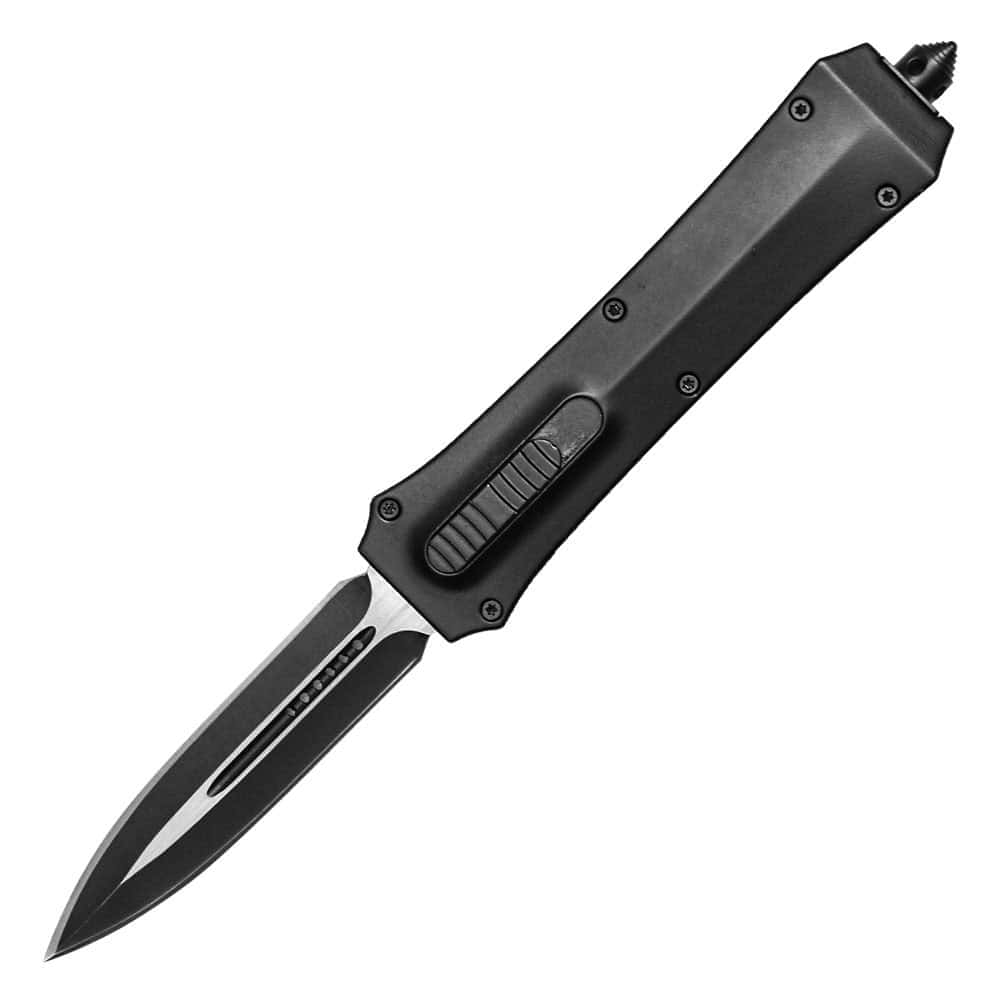
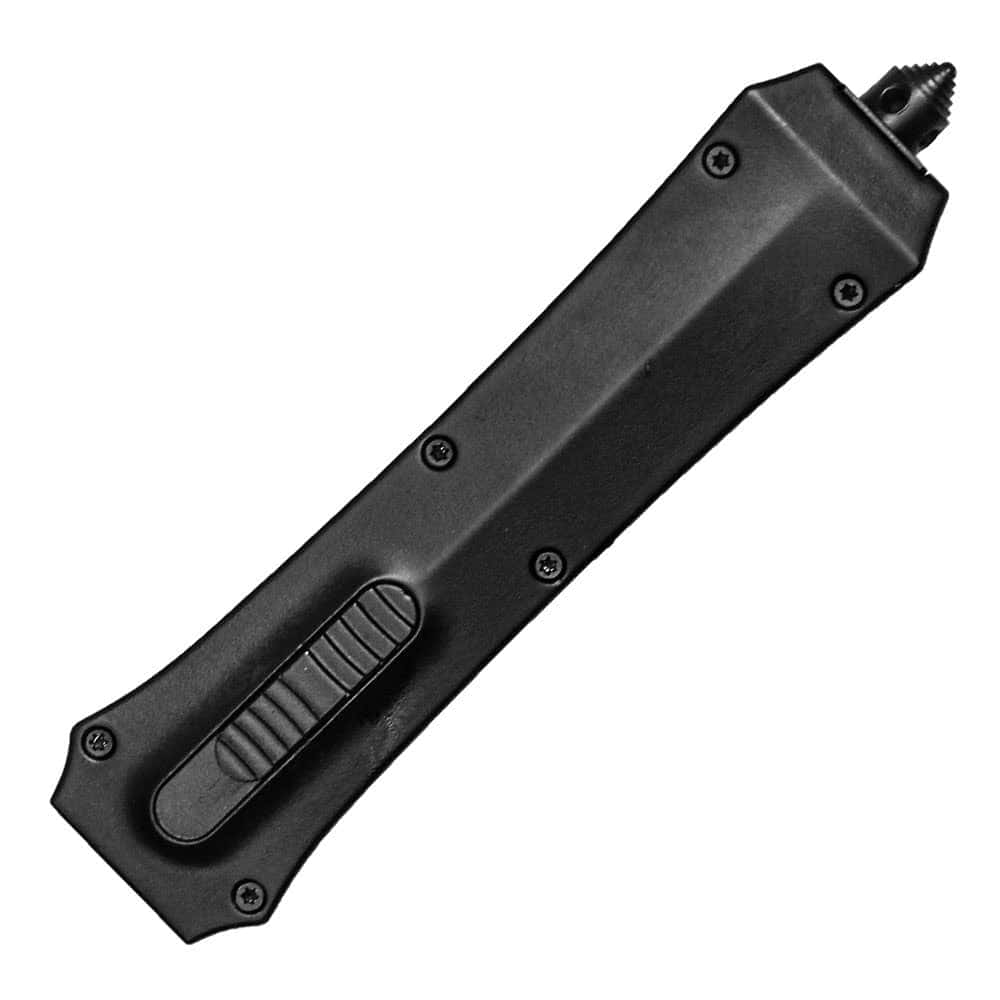
The OTF Automatic Heavy Duty Knife uses slider-activated deployment that requires deliberate thumb pressure. Light contact won’t activate deployment. Firm pressure along the slider’s travel path engages the spring mechanism. The blade extends forward until lock engagement occurs automatically. Retraction reverses the process—opposite slider pressure compresses the spring and pulls the blade into the handle housing.
Double-edge blade geometry provides cutting surfaces on both sides. Single-edge knives require blade rotation to maintain optimal cutting angle. Double-edge designs eliminate this requirement—forward strokes cut with the primary edge, reverse strokes cut with the secondary edge. This bidirectional cutting capability reduces hand fatigue during extended cutting operations.
Premium steel selection determines edge retention characteristics. Higher carbon content increases hardness. Increased hardness extends the interval between sharpening sessions. However, harder steel sacrifices toughness—brittle edges chip more easily under lateral stress. The steel specification in this knife balances edge retention with impact resistance for general-purpose applications.
The 3.75-inch blade length exceeds many automatic knife restrictions. Multiple jurisdictions limit automatic blade length to 3 inches. This knife’s longer blade restricts legal carry areas significantly. Verify local regulations thoroughly—the extended blade length provides enhanced utility but substantially narrows legal carry zones compared to shorter alternatives.
OTF mechanisms contain more components than side-opening automatics. More components mean more potential failure points. Internal track systems guide blade movement. Springs provide deployment force. Lock mechanisms secure blade position. Each component requires proper alignment and cleanliness for reliable operation. Maintenance intervals should occur more frequently than simpler side-opening designs.
The 5.75-inch closed length demands larger pocket space than compact folders. Dedicated pocket carry works well. Belt carry with appropriate sheaths provides secure retention. The size-to-capability ratio optimizes for users who prioritize cutting performance over minimal dimensions.
Technical Specifications:
- Blade Length: 3.75 inches
- Overall Length (Extended): 9.5 inches
- Closed Length: 5.75 inches
- Blade Configuration: Double-edge
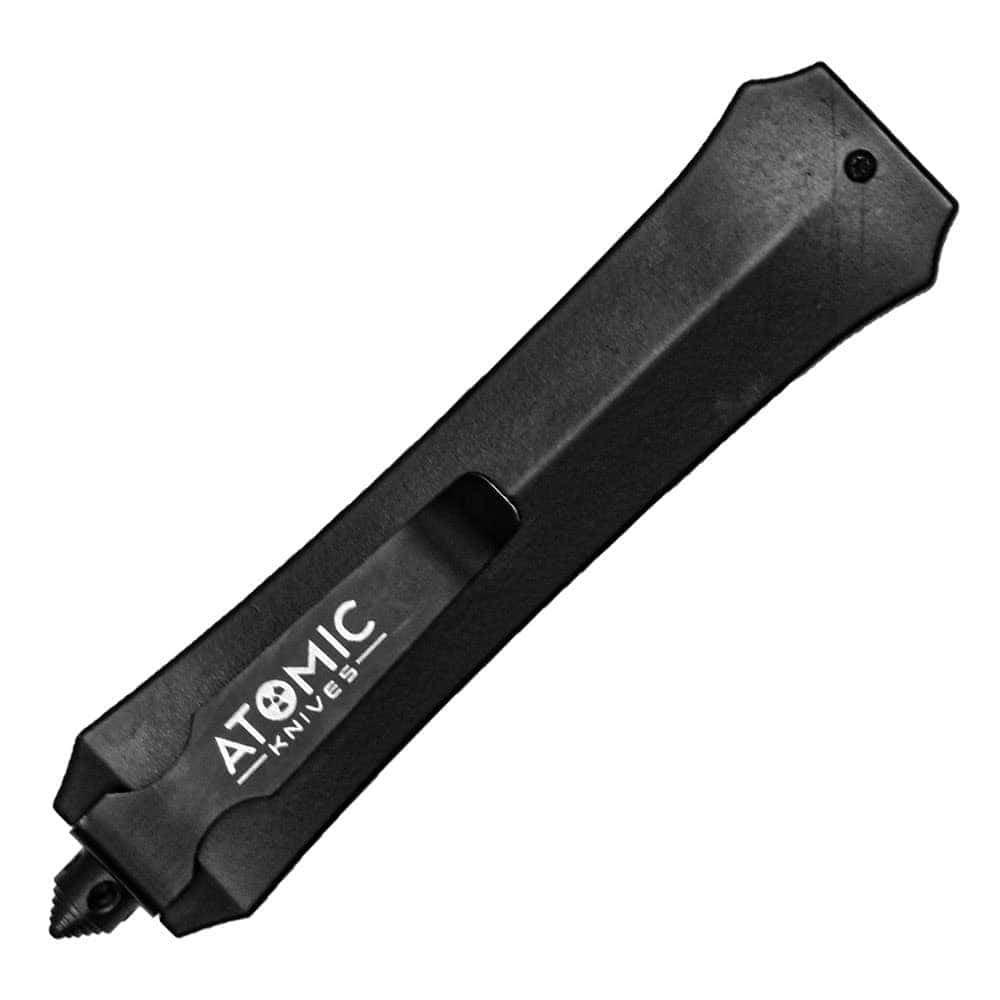
- Handle Material: Premium aluminum
- Blade Material: Premium steel
- Deployment: OTF slider mechanism
- Retraction: Slider-activated
- Weight: 0.7 lbs
- Dimensions: 9.5 x 1.38 inches
- Color: Black
Double-edge blades face additional legal restrictions beyond standard automatic knife laws. Some jurisdictions classify double-edge knives as prohibited weapons regardless of deployment mechanism. Others permit ownership but prohibit concealed carry. Federal facilities typically ban double-edge weapons entirely. Legal research becomes more complex with double-edge configurations—consult local law enforcement or legal counsel for jurisdiction-specific guidance.
OTF mechanisms require regular lubrication for optimal performance. Internal track systems accumulate friction during deployment cycles. Light machine oil applied to slider mechanisms reduces friction and extends component life. Avoid over-lubrication—excess oil attracts dust and debris that compromise performance. Clean external surfaces thoroughly before applying fresh lubrication.
Blade deployment speed creates injury risk for inexperienced users. The blade extends rapidly once spring release occurs. Hand position relative to blade path matters critically. Improper grip positions fingers in the deployment path. Practice deployment with focused attention until muscle memory establishes safe thumb positioning automatically.



Reviews
There are no reviews yet.